
Design Research in Product Development — From Idea to Market Success
Design Research combines user research, trend analysis & market study for better products. Methods, practical examples & process. Eckstein Design Munich.
Design Research
From Idea to Market Success
Overview
Products that inspire people and move markets are not born from gut feeling — they are based on well-founded insights. Design Research describes the structured process of gathering, analyzing, and contextualizing information to transform creative ideas into market-ready innovations.
This approach differs from pure UX research, which primarily focuses on the usability of digital products, and from traditional market research, which examines market sizes and economic potential. Design Research combines both — and goes one step further: It places the human being, their behaviors, and their usage context at the center of product development.
In this article, we show why Design Research is indispensable for companies, which methods have proven effective in practice, and how we at Eckstein Design apply this approach in real client projects — from medical technology to measurement technology.
hat is Design Research
Design Research is the discipline that collects and interprets data to enable well-founded decisions in the design process. It combines methods from social and market research with design expertise. The goal: to develop products, services, and interfaces that not only function, but also meet the needs of users and succeed in the market.
Unlike traditional market research, Design Research is not just about numbers, market shares, or sales forecasts. The focus is on the human being: What needs, behavioral patterns, and expectations do users have? What cultural, societal, or technological trends influence their actions?
Especially in the development of technical products — whether medical device, measurement instrument, or power tool — this perspective is crucial. A device can be technically outstanding and still fail if it overlooks the real workflows, expectations, and pain points of users.
Why Design Research Makes the Difference
Without Design Research, there is a risk that projects are based on assumptions and miss the actual needs. Design Research enables the collection of qualitative and quantitative data that reveals what users truly need. These insights reduce the risk of costly misdevelopments and save time and money.
The concrete benefits go far beyond that:
Deep customer understanding: Those who know the needs, desires, and pain points of their target group precisely, create products that not only appeal superficially but build long-term loyalty. In the development of the Wisap C3 Thermo-Coagulator, this was exactly what mattered: The device is used worldwide — including by non-medical personnel in structurally weak regions. Without in-depth user research beforehand, a product would have been created that works under laboratory conditions but fails in real-world use.
Efficiency and cost savings: Research prevents expensive revisions and misdirected investments by basing decisions on real data. The earlier user needs are identified in the development process, the lower the costs for subsequent adjustments. Studies show that a design change in the concept phase is up to 100 times less expensive than after tool release.
Discovering new opportunities: Design Research uncovers overlooked needs and emerging trends, thereby opening up new market opportunities. Those who systematically analyze where existing solutions reach their limits find the starting points for true innovation.
Securing competitive advantage: Companies that continuously work in a user-focused manner differentiate themselves through better products and services from the competition. Studies like the McKinsey Design Index show that design-oriented companies significantly outperform their competitors in revenue growth and shareholder return.
Another key component is competitive and market analysis. Comparing with competitor products helps to analyze existing user experiences, identify standard patterns, and discover opportunities for improvement. Competitive analysis reveals which features are established in the market, where gaps exist, and how trends are evolving — a decisive factor for market success.
Design Research Methods in Practice
Design Research is diverse and adapts to the respective project goal. Central is the combination of qualitative and quantitative methods. In our work as an industrial design agency, we deploy different instruments depending on the project phase:
User Research — Truly Understanding the User
The core of all research is the user. User Research encompasses interviews, observations, and tests to understand how people use products and what problems or needs they have. Without these investigations, decisions are based on assumptions; with them, products can be developed that meet real market demand.
The most important methods include:
Interviews and field studies provide deep insights into motivations, behaviors, and usage contexts of the target group. In the development of the Brainlab ExacTrac Dynamic, this meant accompanying radiation therapists in their clinical routine: How do they interact with the system under time pressure? Where do operating errors occur? What workflows can be simplified? These insights laid the foundation for a system that was later nominated for the German Future Prize.
Usability tests reveal where a product falls short in operation. By observing users solving specific tasks, pain points and optimization potentials can be identified — before a product goes into series production. In medical technology, we follow the requirements of DIN EN 62366 and distinguish between formative tests (during development) and summative evaluations (for validation).
Quantitative surveys capture statistical data on preferences, problem areas, and usage behavior. They enable representative statements and complement the qualitative findings from interviews and observations.
Co-Creation and Workshops actively involve users and stakeholders in the development process. In our strategic design consulting, we use this format regularly to bring perspectives together early on and develop solution directions together.
Competitive and market analysis
A comprehensive market study examines the competitive landscape, technological status, and economic framework. Competitive analysis investigates available products and compares their usability to identify standard patterns and discover improvement opportunities. Competitive analysis reveals which features are established in the market, where gaps exist, and how trends are evolving — a decisive factor for market success.
A market study answers questions such as: Who are our main competitors? What market trends are influential? What gaps can our product address? These insights directly inform our strategy and positioning.
An example: During the development of a new product identity for Leuze, competitive analysis was a central component. The systematic comparison of design languages from all relevant sensor manufacturers showed where differentiation potential lay — and led to a distinctive corporate industrial design that makes Leuze clearly recognizable in the market.
Trend Analysis — Anticipating the Future
Trend analysis is the systematic examination of data to identify patterns and changes in user behavior or markets. It helps companies predict how user preferences will evolve and align their strategies accordingly.
In our article on Industrial Design Trends 2026, we identified six key developments that currently influence product development and market success in B2B sectors — from AI-powered design to circular design and connected products.
Trend analysis can be conducted in various ways:
Temporal analyses examine developments over a specific period of time — important for identifying seasonal effects and long-term shifts. In medical technology, for example, we observe the growing trend toward home-care devices and outpatient solutions, which is fundamentally changing the requirements for product design.
Geographic analyses compare usage requirements across different regions or target groups. For the X-Therma TimeSeal — a system for safe organ transport — global deployability was a central design factor that influenced research from the outset.
Intuitive analyses combine statistical data with expert knowledge to anticipate future developments. Our experience from over 300 series products and 20 years of project work directly informs this approach.
Market Study vs. Design Research — What's the Difference?
While design research places the user and the user perspective at the center, a market study focuses on market dynamics: size, growth, competition, and economic conditions.
Both methods have different objectives and complement each other: design research shows what users need. A market study shows how and where these solutions can be positioned in the market. In practice, we combine both — because a product that users love but finds no market is just as problematic as one that addresses a large market but misses user needs.

How Eckstein Design Works — Our Research Process
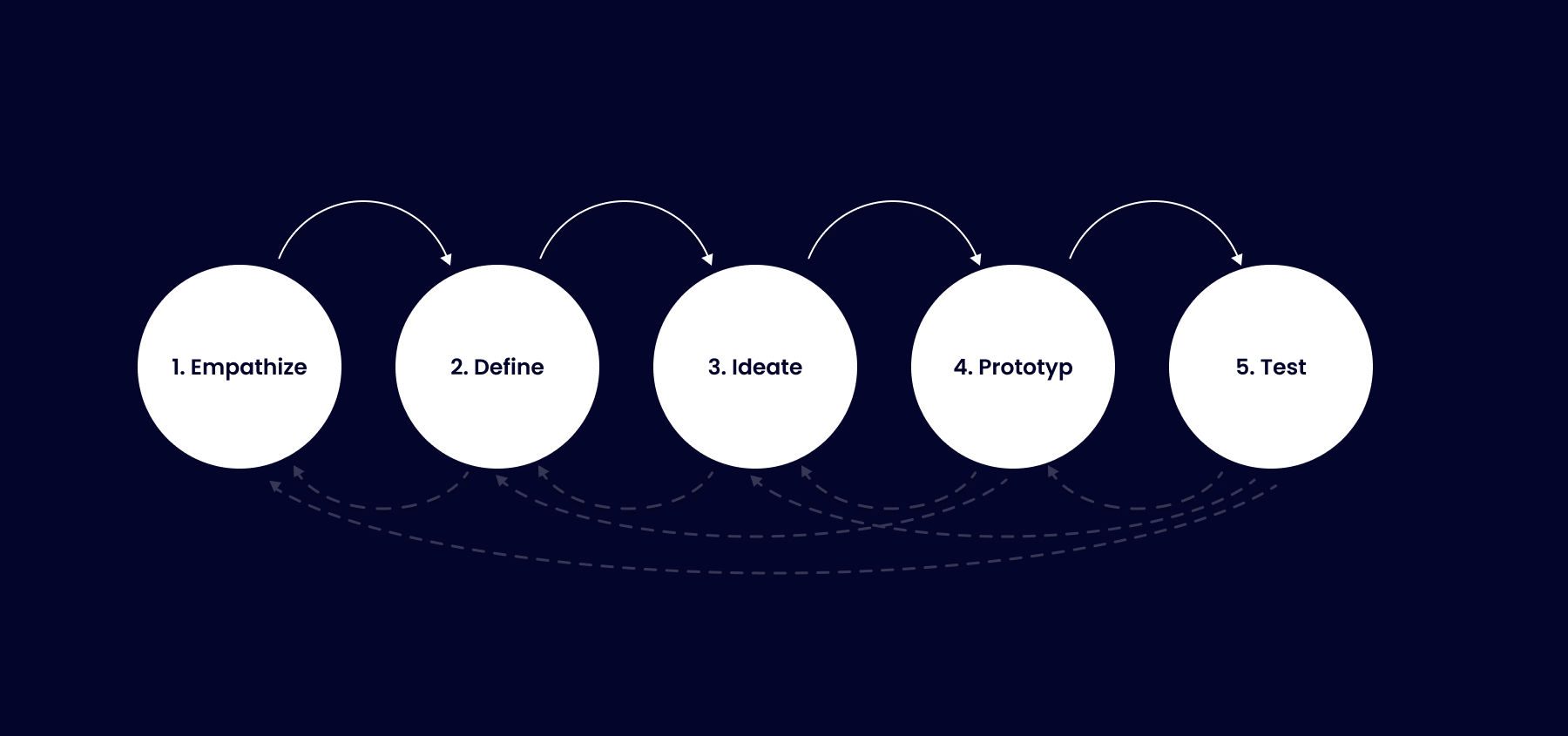
At Eckstein Design, design research is not an isolated step at the beginning of a project, but rather a continuous principle that accompanies every phase of product development.
Phase 1 — Kick-off and Hypothesis Development:
Every project begins with a workshop in which we work together with the client to define objectives, identify stakeholders, and formulate initial hypotheses. What do we believe we know about the users? Where are the greatest uncertainties? What questions need to be answered before design decisions can be made?
Phase 2 — User and Trend Research:
Interviews, field studies, and online surveys provide qualitative and quantitative data. Our team analyzes this and translates it into personas, user journeys, and requirement catalogs. In parallel, we examine which trends in technology and society are relevant in order to incorporate long-term developments into the design.
Phase 3 — Analysis and Synthesis:
Market studies and competitive analyses help identify opportunities and niches. The results from user research and trend analysis are consolidated and translated into concrete design requirements.
Phase 4 — Conception and Validation:
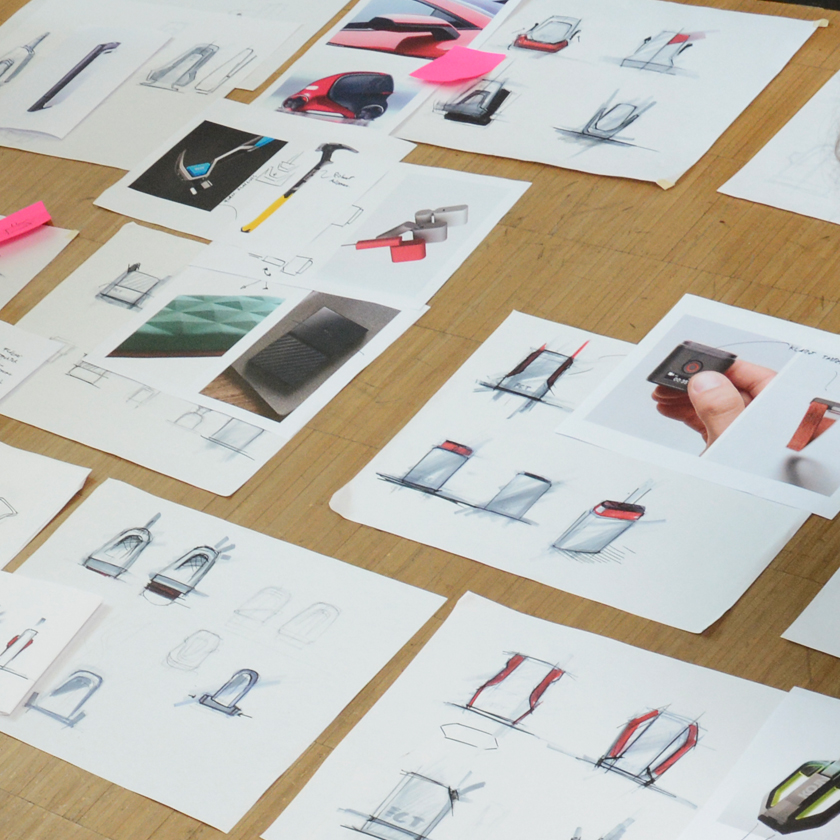
Through co-creation workshops, we develop concepts that are then implemented as prototypes and tested. Iterative usability tests ensure that the solutions are user-friendly. Only once the solutions have been validated do we translate the concepts into final product design — always with an eye toward the future market.
This process has proven itself in projects for companies like Brainlab, Gossen Metrawatt, Steinel, and Winkhaus. Whether it’s a radiation therapy system, a robust digital multimeter for tough everyday work, or an electronic door lock that must combine security and intuitive operation — the starting point is always the same: Understand before designing.
Conclusion: Research is not an optional step
Design Research is the foundation for successful innovation and development processes. By systematically conducting user research, competitive analysis, trend analysis, and market studies, companies create products that fulfill genuine needs, offer competitive advantages, and promise long-term success.
Through well-conducted research, valuable customer knowledge is gained. Insights into market trends and market opportunities are created. In times of rapid technological change, this understanding is essential for identifying the decisive differentiation factor.
Planning a new product? Start with the right insights.
Whether medical technology, measurement technology, or capital goods — we seamlessly integrate design research into your development process. In a free strategy meeting, we identify together which research methods will provide the greatest leverage for your project.